Loading...

Junction · launching 16 October 2026
Everything your community needs to run, and a network to run it on.
Events, tickets, speakers, sponsors, memberships and your own website, all in one place. Plus a network that puts your community in front of practitioners who are already looking for it.
Free to start. Built by organisers, for organisers. Your data stays yours.
- Up to 500 members
- £0
- Up to 500 members
- Fair ticket rates
- 4
- Fair ticket rates
- Identity across the network
- 1
- Identity across the network
- Platform take rate
- 0%
- Platform take rate
The challenge
Running a community shouldn't cost this much, or hurt this much.
$7,500
A year, and rising
Our own platform costs went from $100 to over $7,500 a year on Meetup alone, and we still needed a stack of other tools just to put an event on.
7
Tools that don't talk to each other
Meetup for discovery. Eventbrite for tickets. Google Forms for talks. A spreadsheet for sponsors. Something else for memberships and email. Every handoff is a gap.
$500M
Consolidation, not innovation
Bending Spoons' $500 million acquisition of Eventbrite pulled more of the legacy stack under owners with no particular interest in what organisers need next.
0
Ownership
Your members, history and reputation sit on someone else's platform, under their terms, priced at their discretion.
Why we built this
We're organisers first.
We run 18 communities and 13 conferences. We've chased sponsors at midnight, printed badges in a hotel room, and reconciled a ticket spreadsheet against a door list on a phone with no signal. Junction exists because we needed it.
01
Run it
Events from a twelve-person meetup to a multi-track conference. Tickets, check-in, speakers, sponsors, memberships and your own website, all connected.
02
Grow it
A network of communities and practitioners, so your next event is discoverable by people who've never heard of you.
03
Sustain it
Sponsorship, memberships and a resource hub of templates that actually work, so the community doesn't depend on one organiser holding it all together.
The network
Communities, not isolated islands.
Most platforms treat every community as a separate account with a separate audience. Junction treats them as one network, because the people in them already overlap.
01One place to find everythingEvery community and event on Junction in a single feed, filtered by topic, location, format and date.
02One identity across all of itJoin once. Your profile, attendance history, talks, memberships and saved events follow you across every community. No fifteenth login.
03Following that means somethingFollow communities, speakers and topics, get a digest rather than a flood, and sync it all into your own calendar.
04Discovery you don't have to buyNew members find your community because they're already on the network looking for what you do.
Fair pricing, enforced
A four-rate system that doesn't make anyone prove they're poor.
Ticket pricing is usually either free and unsustainable, or priced for expense accounts and quietly exclusionary. Community seats are capped as a share of the room and the counter is public, so the promise is enforced by the platform, not good intentions.
Rate
Community
Self-select. No means testing, no proof, no forms, no explaining your circumstances to a stranger. Take it if you need it.
Rate
General
The standard price for people paying for themselves.
Rate
Corporate
For people whose employer is paying, because their employer should.
Rate
Supporter
For people who want to fund someone else's seat, with a published running total of how many they've funded.
Run the community
Everything you're doing in seven tabs, in one place.
Events
Meetups, workshops, recurring series, single track and multi-track conferences, online, hybrid and multi-day. Drag and drop scheduling that tells you when you have double booked a speaker or overfilled a room. Run sheets, budgets, crew rotas and supplier contacts attached to the event they belong to.
Tickets and payments
Tiered pricing, early bird windows, discount codes, group bookings, waitlists that promote automatically, comps and sponsor allocations, refunds, transfers and name changes.
Check-in
QR codes that cannot be screenshotted and passed around, wallet passes, badge printing, session-level scanning for multi-track, and a live dashboard of who is in the room. It works offline, because venue wifi has never once been what the venue promised.
Speakers and talks
Open a call for papers, review submissions blind, balance reviewer workload, declare conflicts of interest, score against a rubric, and take a speaker from accepted through slides, travel, consent and expenses without a single spreadsheet. Access requirements captured at submission and carried through to the day.
Sponsors
Packages and inventory with exclusivity enforced, a pipeline from first conversation to signature, contracts and e-signature, every promised deliverable tracked with evidence, a portal where sponsors can see their own reporting, and renewal alerts before the budget cycle closes.
Memberships
Tiers where the benefits are real entitlements rather than marketing copy. Included tickets that redeem against any qualifying event on the network. Team memberships with a seat pool your company can move between people. Member-only sessions and early access to recordings.
Your website
A branded site for the community and for each event, on your own domain, that you edit yourself. Accessibility checked as you write, not audited later. Structured data and local SEO so events actually surface in search.
Analytics
Not an attendance number. Retention, cohorts, and a funnel from viewing to registering to attending to coming back. Attendance by company, so when a sponsor asks who is in the room, you have an answer with evidence behind it.
Content and reach
The talk doesn't end when the room empties.
Talk archive
Links the submission to the session, the video and the speaker's profile. Transcripts, chapters and clips generated for you; recordings go to members first, then to YouTube automatically.
Newsletter and podcast
Newsletter publishing with segmentation, scheduling and sponsor slots. Podcast publishing with episode management and distribution.
Job board
Moderation, expiry and applications routed to the right place.
The organiser programme
You're not a user of this platform. You're part of it.
Communities apply to join the network and get an entitlement bundle on approval. The people building it are organisers too.
Resource hub
Blueprints, run sheets, budget templates and sponsor decks that already work.
Peer forum
People solving the same problems, not a help centre with a five-day SLA.
Annual gathering
A physical meeting of the people who run the network.
Roadmap input
What gets built next is shaped by the people running things on it.
Built on Engine
The same open source platform behind everything we make.
- Enterprise-grade security and audit logging on every plan, including free
- Organiser screens as accessible as attendee pages
- Full export, any time, self-service, no fee
Moving from Meetup, Bevy, Luma or Eventbrite?
Members, events and history come across.
Members and profiles, event history and attendance, speaker history and talk archives, sponsor relationships and contracts. Migration is a supported part of the product, not a favour.
Switching from MeetupWho it's for
Built for everyone who makes a community work.
Community organisers
Run the whole thing from one place, and stop paying more each year for less.
Conference organisers
The operational depth serious events need, including CFP, sponsorship and multi-track scheduling, without three separate vendors.
Companies and DevRel teams
Reach communities honestly through sponsorship and speaking, with reporting that shows what it actually returned. Or run your own internal guilds and communities of practice on the enterprise edition.
Practitioners
One identity across every community you belong to, one calendar, and a fair rate whatever your circumstances.
Roadmap
Where we're going.
16 October 2026
LaunchingLaunch
The network, events, tickets, check-in, microsites, CFP, sponsorship, memberships and analytics, live with the founding communities on it.
Q4 2026
Open Source
Open source release of the Engine core. Community health scoring, re-engagement tools, deeper sponsor attribution and reporting.
2027
Mobile & Global
Native mobile apps for organisers and attendees. Global directory expansion. Partner API for third-party builders. Multi-language support.
Pricing
Free until it's worth paying for.
Free for communities up to 500 members. All prices exclude VAT.
Enterprise
£149
a month, or £1,490 a year
Multi-community operators and conference organisers
Get startedRunning internal guilds or a community-of-practice programme inside a large organisation? That's the Engine enterprise edition, with single sign-on, self-hosting and white labelling.
Our story
We were organisers long before Junction.
Community Stack was built by organisers, one community at a time. Every tool we make and every conference we run comes from doing the work first.
Read the full story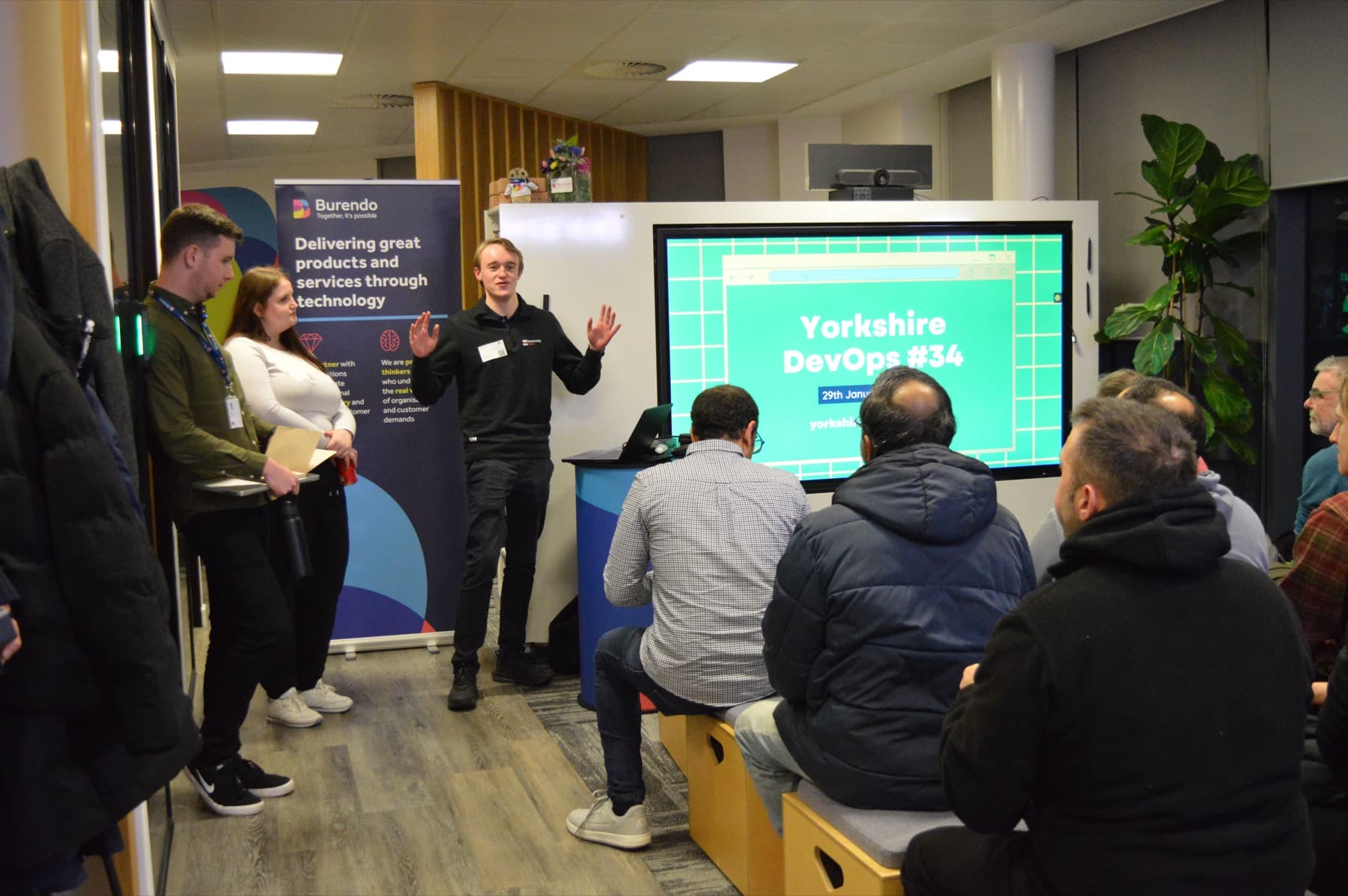 Yorkshire DevOps meetup
Swipe to follow the story →
Questions
Junction, answered.
Is Junction a Meetup alternative?
Yes. Junction replaces Meetup for discovery and membership and also covers what Meetup doesn't: ticketing, calls for speakers, sponsorship, memberships and a website for your community, all connected. It's built on Community Engine, the platform we use to run our own 18 communities and 13 conferences.
How much does Junction cost?
Junction is free for communities up to 500 members. Above that it's £39 a month (or £390 a year), with a £149 a month plan for larger communities and organisations. Prices exclude VAT.
Can I move my group from Meetup to Junction?
Yes. Migration adapters bring members, events and history across from Meetup, Eventbrite, Bevy and Luma, and your data can be exported in full at any time at no cost.
When does Junction launch?
Junction and Community Engine launch on 16 October 2026.
Who owns my community's data on Junction?
You do. Members, history and content belong to your community, with full export at no charge. Community Engine, which Junction runs on, has an open source Apache 2.0 core and can be self-hosted.
Technical communities aren't side projects.
They're the knowledge networks, career pathways and trust systems the engineering industry runs on, priced by people who've had to pay the bill themselves.